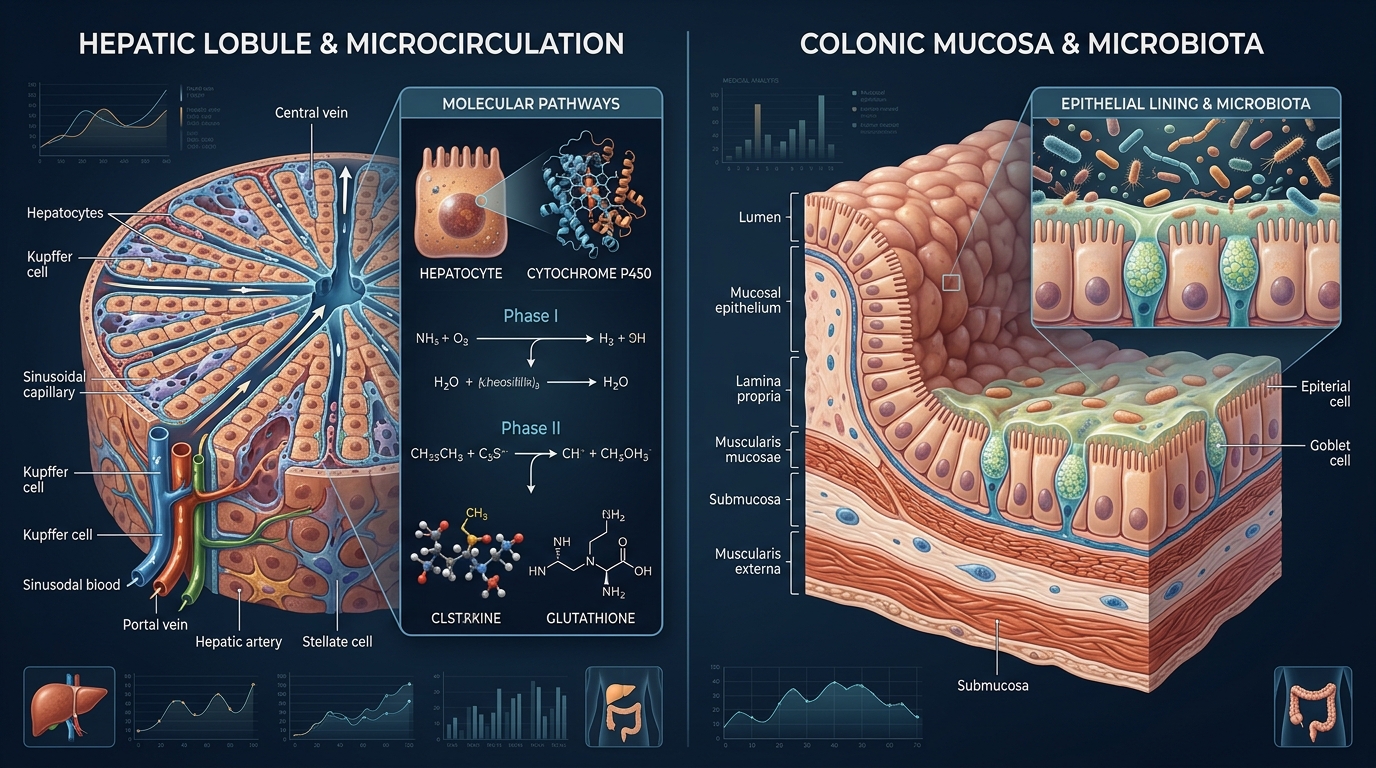
1. The Anatomy of Hepatic Biotransformation: How Your Liver Detoxifies 24 Hours a Day
In the lexicon of celebrity wellness culture, the human liver is routinely characterized as a passive filtration sponge—a biological air filter or plumbing trap that steadily accumulates toxic slag, environmental pollutants, and dietary metabolic waste until a commercial green juice regimen or powdered herbal concoction miraculously "flushes" it clean.
As a board-certified gastroenterologist who has evaluated thousands of liver biopsies and managed complex acute hepatic crises, I must state unequivocally: the liver is not an inert filtration strainer. It is an unceasing, highly orchestrated, energy-intensive biochemical synthesis and transformation organ.
The liver does not hold onto toxins in stagnant tissue pockets waiting for an external solvent. Rather, hepatocytes continuously biotransform lipophilic (fat-soluble) xenobiotics and endogenous metabolites into polar, water-soluble molecules through a rigorously coordinated, multi-stage enzymatic cascade:
Phase I Functionalization: The Cytochrome P450 Superfamily
Located within the smooth endoplasmic reticulum of hepatocytes, the Cytochrome P450 (CYP450) monooxygenase enzyme system (specifically isoforms such as CYP1A2, CYP2E1, CYP3A4, and CYP2C9) initiates the metabolic cascade. Phase I reactions introduce or unmask reactive polar functional groups—predominantly hydroxyl (–OH), carboxyl (–COOH), amino (–NH2), or sulfhydryl (–SH) groups—onto the target molecule via oxidation, reduction, or hydrolysis.
This fundamental reaction requires molecular oxygen, reduced nicotinamide adenine dinucleotide phosphate (NADPH) as an electron donor (shuttled via NADPH-cytochrome P450 oxidoreductase), and a catalytic heme-iron center. Crucially, Phase I reactions frequently generate intermediate metabolites that are far more chemically reactive and cytotoxic than the parent molecule—including highly unstable reactive oxygen species (ROS) and electrophilic free radicals. If these Phase I intermediates are not immediately captured and neutralized by Phase II conjugation, they induce severe hepatocyte membrane lipid peroxidation and mitochondrial DNA damage.
Phase II Conjugation: Enzymatic Covalent Neutralization
Phase II enzymes rapidly attach endogenous, polar co-substrates to the functionalized sites generated during Phase I, converting toxic intermediates into inert, hydrophilic conjugates suitable for rapid excretion. The primary Phase II pathways include:
- Glucuronidation (UDP-Glucuronosyltransferases, UGTs): The quantitative powerhouse of hepatic clearance. UGT enzymes transfer a glucuronic acid moiety from uridine 5'-diphospho-glucuronic acid (UDPGA) to the substrate. UDPGA synthesis is strictly dependent on hepatocyte glycogen reserves and nucleotide triphosphate (UTP) bioenergetics.
- Glutathione Conjugation (Glutathione S-Transferases, GSTs): The liver's premier antioxidant defense. GSTs couple electrophilic xenobiotics to reduced glutathione (GSH)—a tripeptide composed of glutamate, cysteine, and glycine. When intracellular glutathione pools are depleted (due to nutritional starvation, severe fasting, or paracetamol toxicity), electrophilic intermediates bind directly to hepatocyte structural proteins, precipitating acute centrilobular necrosis.
- Sulfation (Sulfotransferases, SULTs): Transfers a sulfate group from 3'-phosphoadenosine-5'-phosphosulfate (PAPS). This pathway requires adequate sulfur-containing amino acid precursors (methionine and cysteine) and cellular ATP.
- Amino Acid Conjugation: Direct enzymatic conjugation of carboxylic acid xenobiotics with specific amino acids, predominantly glycine and taurine, catalyzed by mitochondrial acyl-CoA synthetases.
Phase III Excretion: Transporter-Mediated Elimination
Once a compound has achieved water solubility through Phase II conjugation, it cannot simply diffuse across hepatocyte basolateral or canalicular membranes. It requires active, ATP-dependent export driven by the ATP-binding cassette (ABC) transporter family. Transporters such as Multidrug Resistance-associated Protein 2 (MRP2 / ABCC2) and the Bile Salt Export Pump (BSEP / ABCB11) pump conjugated metabolites into bile canaliculi for fecal elimination via the biliary tract. Meanwhile, basolateral pumps (MRP3, MRP4) efflux conjugates into sinusoidal blood for final filtration and renal excretion by the kidneys.
| Biological Dimension | Commercial "Detox" Marketing Myth | Clinical Hepatic Gastroenterology Reality |
|---|---|---|
| Organ Mechanism | Passive filter that "clogs" with heavy metals, processed food residues, and environmental poisons. | Dynamic metabolic factory running continuous Phase I/II/III enzymatic cycles without storage of inert toxin pools. |
| Required Substrates | Raw celery juice, cayenne pepper lemon water, activated charcoal, senna extracts. | Continuous dietary supply of complete amino acids (cysteine, glycine, methionine), NADPH, ATP, and micronutrient cofactors. |
| Detox Bottleneck | Failure to ingest specialized botanical tonics or undergo regular mechanical flushes. | Hepatocyte bioenergetic depletion, glutathione exhaustion, or saturation of canalicular transport pumps (BSEP/MRP2). |
| Health Impact of Cleanse | "Resets metabolism," purifies blood, eliminates brain fog, accelerates permanent fat loss. | Starves Phase II conjugation of essential amino acids, spikes de novo lipogenesis via liquid fructose, and risks supplement hepatotoxicity. |
2. The Liquid Juice Cleanse Paradox: High-Fructose Steatosis & Amino-Acid Starvation
Among the most ubiquitous rituals in celebrity entertainment circles—frequently promoted prior to major award shows, film shoots, and runway events—is the multi-day "cold-pressed juice fast." Clients are instructed to replace all solid nutrition with 5 to 6 bottles of cold-pressed green, root, and fruit juices per day, under the guise that liquid fasting "gives the digestive tract and liver a much-needed rest."
From a clinical hepatology and gastroenterology perspective, a juice fast is the exact metabolic antithesis of liver support. It delivers a physiological insult characterized by two simultaneous pathophysiological mechanisms:
Mechanism A: The Hepatic Liquid Fructose Surge & De Novo Lipogenesis (DNL)
When whole fruits and vegetables are juiced, their structural insoluble cellulose and hemicellulose fiber matrix is discarded. What remains is a hyper-osmolar solution containing high concentrations of free, liquid monosaccharides: fructose and glucose.
Unlike glucose—which can be cleared and metabolized by nearly every somatic cell in the human body under the regulation of insulin—dietary fructose is cleared almost exclusively by hepatocytes in the liver via glucose transporter 5 (GLUT5) and GLUT2.
Within the hepatocyte, fructose bypasses the primary rate-limiting regulatory enzyme of glycolysis: phosphofructokinase (PFK). Instead, fructose is immediately and irreversibly phosphorylated by ketohexokinase (KHK, or fructokinase) into fructose-1-phosphate:
- Unregulated Phosphate Trapping: Fructokinase possesses no allosteric feedback inhibition. It rapidly consumes intracellular ATP, generating ADP and AMP. AMP deaminase then catabolizes AMP into inosine monophosphate, ultimately yielding high concentrations of intracellular uric acid. Elevated hepatic uric acid directly induces mitochondrial oxidative stress and inhibits endothelial nitric oxide synthase (eNOS).
- Flooding the Triose Phosphate Pool: Aldolase B cleaves fructose-1-phosphate into dihydroxyacetone phosphate (DHAP) and glyceraldehyde. These substrates flow unchecked into glycerol-3-phosphate and acetyl-CoA, providing an overwhelming substrate load that directly fuels de novo lipogenesis (DNL).
- Intrahepatic Steatosis: The liver esterifies these fatty acids into triglycerides. While some are packaged into very-low-density lipoproteins (VLDL) and secreted into circulation (elevating serum triglycerides), hepatic storage capacity is rapidly overwhelmed, driving fat droplet accumulation inside hepatocyte cytoplasm—the histological hallmark of Metabolic Dysfunction-Associated Steatotic Liver Disease (MASLD).
Mechanism B: Amino-Acid Starvation and Phase II Glutathione Depletion
While the liver is battling an acute influx of portal fructose, a multi-day commercial juice cleanse provides virtually zero bioavailable protein.
As established in Section 1, hepatic Phase II conjugation pathways are completely dependent on a continuous flux of specific amino acids:
Reduced glutathione (GSH) is a tripeptide: γ-L-glutamyl-L-cysteinylglycine. The intracellular synthesis of glutathione requires glutamate cysteine ligase (GCL) and glutathione synthetase. L-cysteine is the absolute rate-limiting amino acid in this synthesis. Because the body cannot store free amino acids, a zero-protein fast rapidly forces the liver to rely on systemic muscle proteolysis (catabolism of skeletal muscle tissue) to supply cysteine and glycine.
When dietary protein is eliminated for 3 to 7 days, hepatocyte glutathione synthesis declines precisely at the moment when Phase I reactions and fructose-driven mitochondrial stress are generating elevated concentrations of reactive oxygen species. Rather than "cleansing" the body, the patient creates an intracellular environment of oxidative vulnerability and impaired toxic clearance.
3. Colonic Hydrotherapy: The Myth of 'Mucoid Plaque' and Severe Clinical Hazards
Nowhere in commercial wellness marketing is the divergence between clinical gastroenterology and pseudoscientific myth more pronounced than in the promotion of colonic hydrotherapy (colonic irrigation) and commercial "colon cleanse kits."
Promoters claim that decades of dietary indiscretion leave the human colon coated in a putrefying, toxic layer of encrusted fecal matter known as "mucoid plaque." According to this narrative, this mythical plaque blocks nutrient absorption, leaks toxins into the bloodstream (resurrecting the discredited 19th-century medical hypothesis of "autointoxication"), and can only be dislodged by infusing 20 to 60 liters of water into the rectum or ingesting proprietary cleanse concoctions.
The Physical Reality of "Mucoid Plaque": A Manufactured Chemical Artifact
In my clinical career performing thousands of screening and diagnostic colonoscopies, I have visualized the human colonic mucosal lining in patients ranging from healthy teenagers to octogenarians. "Mucoid plaque" does not exist in human anatomy or pathology.
The human colon is lined by a dynamic, self-renewing single layer of simple columnar epithelial cells and goblet cells. Goblet cells continuously produce a protective, gel-like mucin layer—predominantly composed of the mucin-2 (MUC2) glycoprotein—which undergoes total physical turnover every 48 to 72 hours. Epithelial enterocytes themselves shed and regenerate entirely every 4 to 5 days. Old cells, unfermented dietary fiber, and commensal microbes are continuously incorporated into stool and eliminated via coordinated peristaltic contractions. It is physically, biologically, and anatomically impossible for fecal matter to remain "baked onto" or encrusted against the colonic wall for years.
What are the dark, rubbery, cord-like casts that patients triumphantly photograph and post to social media after completing a commercial colon cleanse kit?
Almost every commercial "mucoid plaque cleanse" relies on two primary active ingredients: high doses of psyllium husk fiber (a soluble, highly hydrophilic mucilage) and bentonite clay (an absorbent aluminum phyllosilicate). When ingested together with intestinal fluid, bentonite clay absorbs water up to twelve times its dry volume, while psyllium husk swells into an impenetrable, cross-linked polysaccharide gel. As this gelatinous mixture traverses the large intestine, it molds to the haustral folds of the colon, dehydrates into a tough, cohesive, rubbery cast, and is expelled as a long, rope-like structure. The patient is not expelling ancient toxins; they are expelling the solidified chemical reaction of the very product they swallowed.
Severe Clinical Complications of Colonic Hydrotherapy
While commercial cleansing kits are largely a financial fraud, mechanical colonic hydrotherapy—in which large volumes of fluid are pumped under pressure through a speculum inserted into the rectum—carries grave, documented medical dangers:
- Mechanical Iatrogenic Colonic Perforation: The wall of the human rectosigmoid junction and cecum is delicate—measuring merely 2 to 3 millimeters in thickness in certain segments. Insertion of non-medical speculums or excessive hydraulic pressure can cause full-thickness barotrauma or mechanical perforation of the colonic wall. Colonic perforation spills millions of coliform bacteria and fecal matter directly into the sterile peritoneal cavity, inducing catastrophic fecal peritonitis, septic shock, and necessitating emergency exploratory laparotomy, bowel resection, and temporary diverting colostomy (stoma) formation.
- Severe Hyponatremia & Water Intoxication: When large volumes of unbuffered hypotonic tap water are flushed into the colon, the mucosal vasculature rapidly absorbs free water across osmotic gradients. This causes acute dilutional hyponatremia (serum sodium plunging below 125 mmol/L). Severe hyponatremia induces acute cerebral edema, status epilepticus, coma, and permanent neurological impairment or death.
- Electrolyte Collapse and Cardiac Arrhythmias (Coffee Enemas): In alternative wellness circles, coffee enemas are frequently touted to "stimulate liver bile flow via the portal vein." In clinical reality, coffee enemas have caused severe, documented proctocolitis, polymicrobial bacteremia, and profound hypokalemia (potassium wasting), which triggers fatal ventricular cardiac arrhythmias.
- Microbiome Destruction & MUC2 Mucosal Stripping: High-pressure hydraulic irrigation physically strips the protective inner and outer MUC2 mucin layers from the mucosal epithelium. It violently washes out trillions of commensal, butyrate-producing anaerobic bacteria (including Faecalibacterium prausnitzii, Roseburia, and Bifidobacterium), leaving the bare epithelial barrier vulnerable to colonization by opportunistic pathogens such as Clostridioides difficile.
Note: A medically prescribed split-dose colonoscopy bowel preparation relies on oral, iso-osmotic polyethylene glycol (PEG) solutions specifically designed to balance electrolytes and clear the mucosal surface for cancer detection—completely distinct from unmonitored retrograde hydrotherapy.
4. Herbal & Dietary Supplement-Induced Liver Injury (HDS-DILI)
Perhaps the greatest irony of celebrity "detox" culture is that the very supplements marketed to cleanse the liver are among the fastest-growing causes of acute liver failure in modern gastroenterology.
According to the American Association for the Study of Liver Diseases (AASLD) Practice Guidance on Drug, Herbal, and Dietary Supplement-Induced Liver Injury, herbal and dietary supplements (HDS) now account for more than 20% of all cases of toxic hepatitis and acute drug-induced liver injury (DILI) in the United States—a figure that has quadrupled over the past two decades.
High-Risk Botanical Detox Ingredients
Because dietary supplements are regulated under the Dietary Supplement Health and Education Act (DSHEA) of 1994, they do not undergo mandatory pre-market FDA safety, efficacy, or purity testing prior to consumer sale. Common offenders found in viral celebrity "skinny teas," "metabolic cleanses," and "detox capsules" include:
- Concentrated Green Tea Extract (Epigallocatechin Gallate, EGCG): While drinking brewed green tea is completely benign, concentrated EGCG powder found in metabolic detox supplements acts as a potent hepatotoxin at high doses. EGCG induces collapse of hepatocyte mitochondrial membrane potential, reactive oxygen species formation, and acute hepatocellular necrosis requiring emergent liver transplantation.
- Senna Leaf & Pod Extracts (Anthraquinones): Marketed as "gentle overnight detox teas," senna contains anthraquinone glycosides (sennosides A and B). Sennosides irritate the colonic myenteric plexus to stimulate hyper-peristalsis. Chronic consumption leads to severe dependence, hypokalemic nephropathy, and melanosis coli—a dark brown-black pigmentation of the colonic mucosa caused by apoptosis of colonic epithelial cells and their engulfment by macrophages.
- Usnic Acid & Botanical Multitasking Blends: Often hidden in fat-burning "detox" formulas, usnic acid uncouples mitochondrial oxidative phosphorylation in hepatocytes, leading to catastrophic ATP depletion and fulminant toxic hepatitis.
If you have recently initiated a commercial detox tea, herbal cleanse kit, or high-dose botanical supplement, watch for the classic clinical triad of acute toxic hepatitis:
- Scleral Icterus & Jaundice: Yellowing of the white of the eyes and skin, caused by impaired bilirubin conjugation and excretion.
- Achollic Stools & Dark Urine: Pale, clay-colored bowel movements paired with tea-colored or dark brownish urine.
- Unexplained Pruritus & Fatigue: Severe, generalized skin itching without a rash, accompanied by profound malaise and right-upper-quadrant abdominal discomfort.
Any of these signs necessitates immediate discontinuation of all supplements and urgent bloodwork (hepatic panel: ALT, AST, Total Bilirubin, Alkaline Phosphatase, and INR).
5. Evidence-Based Gastroenterology: How to Truly Support Hepatic & Colonic Longevity
If commercial cleanses, juice fasts, and colonic hydrotherapy are pseudoscientific at best and dangerous at worst, what is the legitimate, clinical gastroenterology framework for optimizing gut and liver health?
The human body requires no artificial purgatives. It thrives when you consistently supply the exact biochemical building blocks needed by endogenous enzymatic and peristaltic systems:
Nutrient-Dense Mediterranean Diet
Abundant in polyphenols, extra-virgin olive oil (rich in oleic acid), and wild fatty fish (EPA/DHA). Clinical trials consistently demonstrate that a Mediterranean nutritional pattern decreases intrahepatic lipid accumulation and suppresses hepatic stellate cell fibrogenesis even in the absence of caloric restriction.
Diverse Prebiotic Fiber (30–38g Daily)
Rather than stripping fiber through juicing, consume diverse soluble and insoluble fibers (inulin, resistant starch, beta-glucan). Colonic bacteria ferment these fibers into Short-Chain Fatty Acids (SCFAs)—principally butyrate, which fuels colonic colonocytes, strengthens mucosal tight junctions (claudin-1, occludin), and prevents endotoxemia (LPS leakage).
Moderate Coffee Consumption
Consuming 2 to 3 cups of filtered black coffee daily is one of the most robust, evidence-backed lifestyle interventions in hepatology. Chlorogenic acids and caffeine metabolites (paraxanthine) downregulate Transforming Growth Factor-beta (TGF-β), substantially reducing the risk of liver fibrosis, cirrhosis, and hepatocellular carcinoma.
Insulin Sensitization via Exercise
Regular aerobic and resistance exercise enhances peripheral muscle insulin sensitivity, lowers fasting insulin (HOMA-IR), and shuts down the continuous delivery of non-esterified free fatty acids from adipose tissue to the liver, reversing metabolic steatosis naturally.
6. Frequently Asked Questions (Clinical FAQ)
Can a commercial juice cleanse or detox tea flush toxins out of my liver?
No. The human liver does not store toxins as an inert filter waiting to be washed. Hepatic detoxification is an unceasing, autonomous enzymatic biotransformation system governed by Phase I CYP450 enzymes and Phase II conjugation pathways (such as glucuronidation and glutathione coupling). No commercial juice fast, powder, or tea has ever been clinically proven to enhance clearance, and many botanical detox teas actually risk drug-induced liver injury (DILI).
What is the rubbery 'mucoid plaque' expelled during commercial colon cleanses?
Mucoid plaque is a medically non-existent physiological myth. The dark, rubbery casts expelled by consumers during colon cleanses are synthetic artifacts created inside the bowel lumen when ingested psyllium husk fiber binds with bentonite clay (aluminosilicate) and intestinal fluids, coagulating into a thick, mold-like cast of the colon.
Can multi-day fruit juice cleanses worsen liver health or cause fatty liver?
Yes. When whole fruits are juiced, insoluble fiber is discarded, delivering massive, unbuffered boluses of liquid fructose straight to the portal vein. The hepatic enzyme ketohexokinase (fructokinase) phosphorylates fructose without negative feedback, flooding hepatocytes with triose phosphates and driving de novo lipogenesis (DNL), which promotes hepatic steatosis. Simultaneously, the lack of protein starves the liver of cysteine and glycine needed to synthesize glutathione.
What are the primary medical dangers of colonic hydrotherapy?
Colonic hydrotherapy carries severe, documented gastroenterological hazards. These include mechanical perforation of the rectum or sigmoid colon requiring emergency surgery and temporary stoma formation, life-threatening electrolyte shifts such as hyponatremia (water intoxication) and hypokalemia, septicemia from non-sterile equipment, and mechanical disruption of the protective colonic mucin barrier and commensal microbiome.
What is Herbal and Dietary Supplement-Induced Liver Injury (HDS-DILI)?
HDS-DILI refers to toxic liver injury, hepatitis, or acute liver failure triggered by commercial wellness supplements, weight-loss pills, and detox concoctions. According to AASLD practice guidance, botanical supplements—including concentrated green tea extract (EGCG), usnic acid, and unregulated detox blends—account for over 20% of all drug-induced liver injury cases in the United States.
What is the medically legitimate way to support liver and bowel health?
True hepatic and colonic longevity relies on physiological fundamentals: a nutrient-dense Mediterranean dietary pattern rich in soluble and fermentable prebiotic fiber, adequate high-biological-value protein to maintain amino acid pools for Phase II conjugation, moderate coffee intake (which is clinically shown to reduce hepatic fibrosis), regular cardiovascular exercise to maintain insulin sensitivity, and avoidance of unnecessary botanical supplements.
7. Peer-Reviewed Clinical Literature & Practice Guidelines
- Acosta RD, Cash BD. Clinical effects of colonic cleansing for general health promotion: a systematic review. Am J Gastroenterol. 2009;104(11):2830-2836. PMID: 19724266
- Fontana RJ, et al. (AASLD Practice Guidance). AASLD practice guidance on drug, herbal, and dietary supplement–induced liver injury. Hepatology. 2023;77(3):1036-1053. PMID: 35899384
- Xu C, et al. Phase II drug metabolizing enzymes: regulation and role in xenobiotic detoxification and cancer prevention. Curr Pharm Des. 2006;12(9):1069-1090. PMID: 16472997
- Rinella ME, et al. A multi-society Delphi consensus statement on new fatty liver disease nomenclature. Hepatology. 2023;78(6):1966-1986. PMID: 37363821
- Jensen T, et al. Fructose and sugar: A major mediator of non-alcoholic fatty liver disease. J Hepatol. 2018;68(5):1063-1075. PMID: 29408694
- Mishori R, Otubu A, Jones AA. The dangers of colon cleansing. J Fam Pract. 2011;60(8):454-457. PMID: 21814639