The Mediterranean Diet for Liver Fat Reduction: Randomized Controlled Trials, MRI-PDFF Endpoints, & Lipid Clearance
A clinical gastroenterologist's evaluation of nutritional hepatology. How landmark randomized controlled trials—including DIRECT-PLUS and PREDIMED—prove the Mediterranean dietary pattern clears intrahepatic triglycerides, activates AMPK/PPAR-α, and halts necroinflammation.
Key Diagnostic & Nutritional Takeaways
- Gold-Standard Guideline Endorsement: The American Association for the Study of Liver Diseases (AASLD) and European EASL-EASD-EASO guidelines unanimously recommend the Mediterranean diet as the reference dietary pattern for reversing metabolic liver disease.
- The DIRECT-PLUS Landmark Finding: The 18-month DIRECT-PLUS randomized trial (Gepner et al., Hepatology 2021; PMID: 33461965) demonstrated that a polyphenol-enriched Green Mediterranean Diet achieved a 38.9% relative reduction in intrahepatic fat via MRI-PDFF, doubling the efficacy of standard Mediterranean eating (19.6%).
- Fat Clearance Without Weight Loss: Isocaloric RCTs show that replacing saturated fats and refined sugars with extra virgin olive oil (EVOO) and omega-3 polyunsaturated fatty acids depletes hepatic steatosis even when total body weight remains completely stable.
- The 30% Threshold: Achieving a ≥30% relative reduction on MRI-PDFF correlates with histologic resolution of steatohepatitis and regression of liver fibrosis in clinical trials.
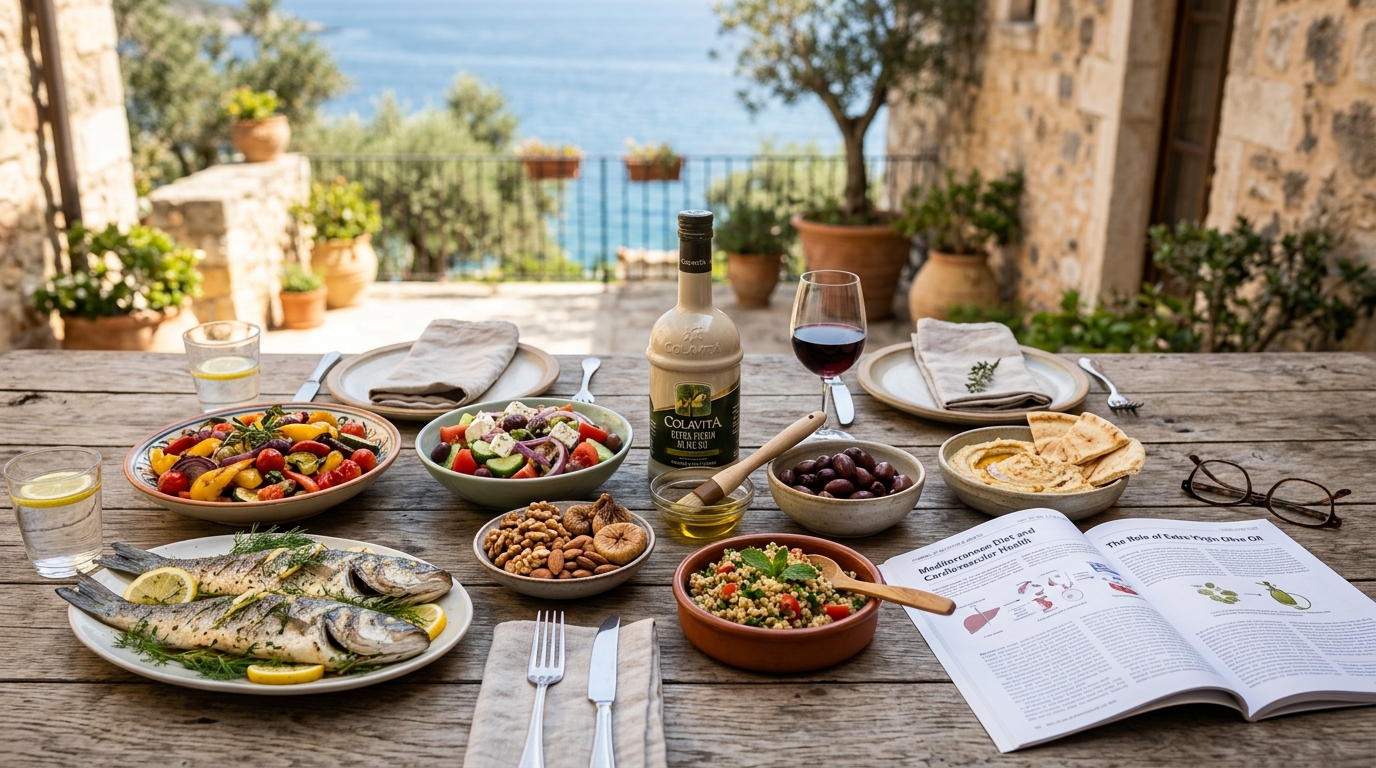
1. The Paradigm Shift: From Generic Calorie Counting to Dietary Architecture
In clinical practice, patients diagnosed with metabolic dysfunction-associated steatotic liver disease (MASLD) are routinely told: "Just eat less, burn more calories, and lose 10% of your body weight." While negative caloric balance is undeniably therapeutic, this generic prescription fails over 85% of individuals over the long term.
Furthermore, it ignores a profound biological truth: all calories are not metabolically equivalent inside the human hepatocyte. One hundred calories of liquid fructose overwhelm hepatic fructokinase, bypass phosphofructokinase checkpoints, and drive runaway de novo lipogenesis. Conversely, one hundred calories of polyphenolic extra virgin olive oil activate 5′ AMP-activated protein kinase (AMPK), suppress sterol regulatory element-binding protein-1c (SREBP-1c), and upregulate mitochondrial β-oxidation.
Over the past decade, rigorous randomized controlled trials (RCTs) utilizing advanced magnetic resonance imaging have established the Mediterranean diet not merely as a generic lifestyle suggestion, but as an active metabolic therapeutic capable of melting ectopic intrahepatic fat stores.
2. Landmark Clinical Trials: DIRECT-PLUS, PREDIMED, and Ryan et al.
The empirical evidence supporting Mediterranean nutrition in hepatology is grounded in landmark human prospective clinical investigations:
The DIRECT-PLUS Trial (Gepner et al., Hepatology 2021)
Conducted over an 18-month duration among 294 adults with abdominal adiposity and dyslipidemia, the DIRECT-PLUS study represents the most sophisticated dietary RCT in hepatology history (Gepner et al., Hepatology 2021; PMID: 33461965). Patients were randomized into three isocaloric arms accompanied by identical physical activity regimens:
- Arm 1: Healthy Dietary Guidelines (HDG): Standard low-fat lifestyle advice.
- Arm 2: Standard Mediterranean Diet (MED): Rich in vegetables, legumes, poultry, fish, and 28g walnuts daily, with red meat restriction.
- Arm 3: Green Mediterranean Diet (Green-MED): Standard MED supplemented with high-polyphenol green tea (3–4 cups/day) and 100g frozen cubes of Wolffia globosa (Mankai duckweed shake), with total avoidance of red and processed meats.
Intrahepatic fat was quantitatively measured before and after the 18-month intervention using magnetic resonance proton density fat fraction (MRI-PDFF)—the clinical gold standard.
| Intervention Arm (DIRECT-PLUS) | Mean Weight Loss | Intrahepatic Fat Relative Reduction | Hepatoprotective Significance |
|---|---|---|---|
| Healthy Dietary Guidelines (HDG) | -0.4 kg | -12.2% relative fat drop | Minimal steatosis regression; modest baseline shift |
| Standard Mediterranean Diet (MED) | -2.7 kg | -19.6% relative fat drop | Clinically meaningful lipid clearance; P < 0.05 vs HDG |
| Green Mediterranean Diet (Green-MED) | -3.7 kg | -38.9% relative fat drop | Doubled fat clearance vs standard MED; profound biomarker normalization |
Crucially, statistical multivariable modeling proved that the dramatic 38.9% liver fat reduction in the Green-MED group was independent of caloric restriction or weight loss. Dietary polyphenol intake and plant-based protein substitution directly accelerated intrahepatic lipid clearance.
The Isocaloric Proof: Ryan et al. (Diabetes Care 2013)
A vital question in nutritional medicine has always been: Does the Mediterranean diet clear liver fat because patients lose weight, or does the diet itself possess intrinsic hepatoprotective properties?
Dr. M.C. Ryan and Australian investigators answered this decisively in an elegant randomized crossover trial (Ryan et al., Diabetes Care 2013; PMID: 23454558). They placed non-diabetic MASLD patients on either a Mediterranean diet or an isocaloric control diet for 6 weeks, with an intervening washout. Caloric intake was strictly tailored to keep patient weight completely static.
Despite zero change in total body weight, hepatic steatosis measured by magnetic resonance spectroscopy (1H-MRS) dropped significantly on the Mediterranean diet, accompanied by marked improvements in insulin sensitivity (HOMA-IR). This proved that changing fat quality from saturated to monounsaturated fatty acids directly reprograms hepatocyte lipid metabolism.
3. Molecular Mechanisms: How Mediterranean Nutrients Cleanse Hepatocytes
The hepatoprotective power of the Mediterranean diet operates through three distinct biochemical pathways:
1. EVOO Polyphenols
Extra virgin olive oil contains potent phenolic secoiridoids: hydroxytyrosol, oleocanthal, and oleuropein. These compounds stimulate phosphorylation of AMPK, activating peroxisome proliferator-activated receptor-alpha (PPAR-α). This signals the hepatocyte to accelerate mitochondrial β-oxidation while shutting down fatty acid synthase (FAS) and acetyl-CoA carboxylase (ACC).
2. Oleic Acid (MUFA)
Unlike palmitic acid (saturated fat), which induces endoplasmic reticulum (ER) stress, mitochondrial swelling, and caspase activation, monounsaturated oleic acid (18:1 cis-9) is preferentially funneled into harmless neutral lipid droplets or oxidized into ATP. Oleic acid protects hepatocytes against saturated fatty acid-induced lipotoxicity.
3. Marine Omega-3 PUFAs
Wild fatty fish (sardines, mackerel, wild salmon) deliver eicosapentaenoic acid (EPA) and docosahexaenoic acid (DHA). These long-chain polyunsaturated fats serve as enzymatic substrates for specialized pro-resolving mediators (SPMs: resolvins, protectins, maresins) that deactivate hepatic Kupffer cells and dampen fibrogenic stellate cell activation.
4. MRI-PDFF: The Clinical Imaging Endpoint for Liver Fat
In modern hepatology research and advanced clinical consultations, hepatic steatosis is no longer assessed by crude ultrasound reports stating "mildly echogenic liver."
The gold-standard non-invasive biomarker is Magnetic Resonance Imaging Proton Density Fat Fraction (MRI-PDFF). MRI-PDFF utilizes chemical-shift gradient-echo acquisitions to quantify the exact ratio of protons bound in triglycerides to the total protons bound in both water and fat, outputting a precise percentage:
- < 5.0%: Completely normal intrahepatic fat content (no steatosis).
- 5.0% – 15.0%: Mild to moderate hepatic steatosis.
- > 15.0%: Severe hepatic steatosis (correlating with grade S3 steatosis).
In clinical trials, an absolute drop of 5% or a relative reduction of ≥ 30% on MRI-PDFF is universally recognized by regulatory agencies (including the FDA) as a validated surrogate endpoint. Achieving this ≥30% relative reduction is strongly predictive of histologic MASH resolution, reduction in cellular ballooning, and stabilization or reversal of fibrosis (Romero-Gómez et al., J Hepatol 2017; PMID: 28545937).
5. The Practical Clinical Mediterranean Protocol for MASLD
To translate clinical trial architecture into daily life, patients should implement the following evidence-based nutritional structure:
The Hepatoprotective Mediterranean Plate Architecture:
- 3 to 4 Tablespoons Extra Virgin Olive Oil: Cold-pressed, unrefined, consumed raw over vegetables and proteins.
- 30g Raw Tree Nuts: Walnuts (rich in alpha-linolenic acid), almonds, or pistachios.
- 3 to 4 Cups Polyphenol Beverages: Unsweetened green tea (EGCG) or black filtered coffee (caffeine and chlorogenic acid stimulate liver autophagy).
- Abundant Cruciferous Fiber: Broccoli, Brussels sprouts, arugula, and artichokes.
- Liquid Fructose & Sweeteners: Commercial sodas, bottled fruit juices, agave, honey, and high-fructose corn syrup.
- Industrial Seed Oils: Soybean, corn, canola, and cottonseed oils (high in oxidized omega-6 linoleic acid).
- Ultra-Processed Red Meats: Sausage, bacon, cold cuts, and packaged grain-fed meats.
- Refined Grains: White breads, instant noodles, and processed commercial snack bars.
6. Peer-Reviewed Clinical Citations (PubMed References)
1. Gepner Y, Shelef I, Schwarzfuchs D, et al. The effect of green Mediterranean diet on hepatosteatosis: the DIRECT PLUS randomized controlled trial. Hepatology. 2021;74(4):1710-1724. PMID: 33461965
2. Ryan MC, Itsiopoulos C, Thodis T, et al. The Mediterranean diet improves hepatic steatosis and insulin sensitivity in individuals with non-alcoholic fatty liver disease. Diabetes Care. 2013;36(5):e29-e30. PMID: 23454558
3. Romero-Gómez M, Zelber-Sagi S, Trenell M. Treatment of NAFLD with diet, physical activity and exercise. J Hepatol. 2017;67(4):829-846. PMID: 28545937
4. Estruch R, Ros E, Salas-Salvadó J, et al. Primary Prevention of Cardiovascular Disease with a Mediterranean Diet Supplemented with Extra-Virgin Olive Oil or Nuts. N Engl J Med. 2018;378(25):e34. PMID: 29897866
Frequently Asked Questions: Mediterranean Nutrition
Can the Mediterranean diet reduce liver fat without significant weight loss?
Yes. While calorie restriction and weight loss accelerate hepatic fat clearance, randomized controlled cross-over trials (such as Ryan et al., Diabetes Care 2013; PMID: 23454558) demonstrate that adopting a Mediterranean diet reduces hepatic steatosis by up to 39% even when caloric intake is held isocaloric with zero change in total body weight. The benefit stems from replacing saturated fats and refined carbohydrates with oleic acid, extra virgin olive oil polyphenols, and omega-3 polyunsaturated fatty acids that downregulate de novo lipogenesis.
What did the DIRECT-PLUS trial reveal about the 'Green' Mediterranean diet?
The landmark DIRECT-PLUS trial (Gepner et al., Hepatology 2021; PMID: 33461965) demonstrated that an enriched 'Green Mediterranean Diet'—supplemented with 3 to 4 cups of green tea, 28 grams of walnuts, and Wolffia globosa (Mankai aquatic duckweed)—achieved a 38.9% relative reduction in intrahepatic fat measured by MRI-PDFF over 18 months, compared to 19.6% on a standard Mediterranean diet and 12.2% on standard dietary guidelines.
What MRI-PDFF reduction is considered clinically meaningful for reversing MASH?
In hepatology clinical trials, a 30% or greater relative reduction in proton density fat fraction on MRI (MRI-PDFF) serves as the validated non-invasive surrogate endpoint. Achieving a greater than or equal to 30% relative reduction strongly correlates with histologic MASH resolution, reduction in hepatocyte ballooning, and stabilization or regression of hepatic fibrosis.