Statin Safety in Fatty Liver Disease: Debunking Hepatotoxicity Myths & Maximizing Cardiometabolic Protection
A gastroenterologist's evaluation of lipid-lowering pharmacotherapy in metabolic liver disease. Why withholding statins for mild transaminase elevations causes preventable cardiac deaths, what AASLD/AHA guidelines mandate, and how statins reduce liver cancer risk by up to 50%.
Key Clinical Practice Takeaways
- The Leading Killer: Cardiovascular disease—not cirrhosis or liver failure—is the primary cause of death in patients diagnosed with MASLD and MASH. Withholding statins increases all-cause mortality.
- Myth vs. Reality: True drug-induced liver injury (DILI) from statins is exceedingly rare, occurring in approximately 1 per 100,000 patient-years. Mild, asymptomatic transaminitis is a benign, dose-dependent class effect that frequently resolves spontaneously.
- Universal Guideline Consensus: The American Association for the Study of Liver Diseases (AASLD) and American Heart Association (AHA) state unequivocally that statins are safe across the entire spectrum of MASLD, including compensated cirrhosis.
- Liver Tumor Chemoprevention: Meta-analyses demonstrate that regular statin therapy reduces the incidence of hepatocellular carcinoma (HCC) by 30% to 50% and significantly decreases hepatic venous pressure gradient (HVPG) in portal hypertension.
1. The Paradox of Statin Phobia in Hepatology
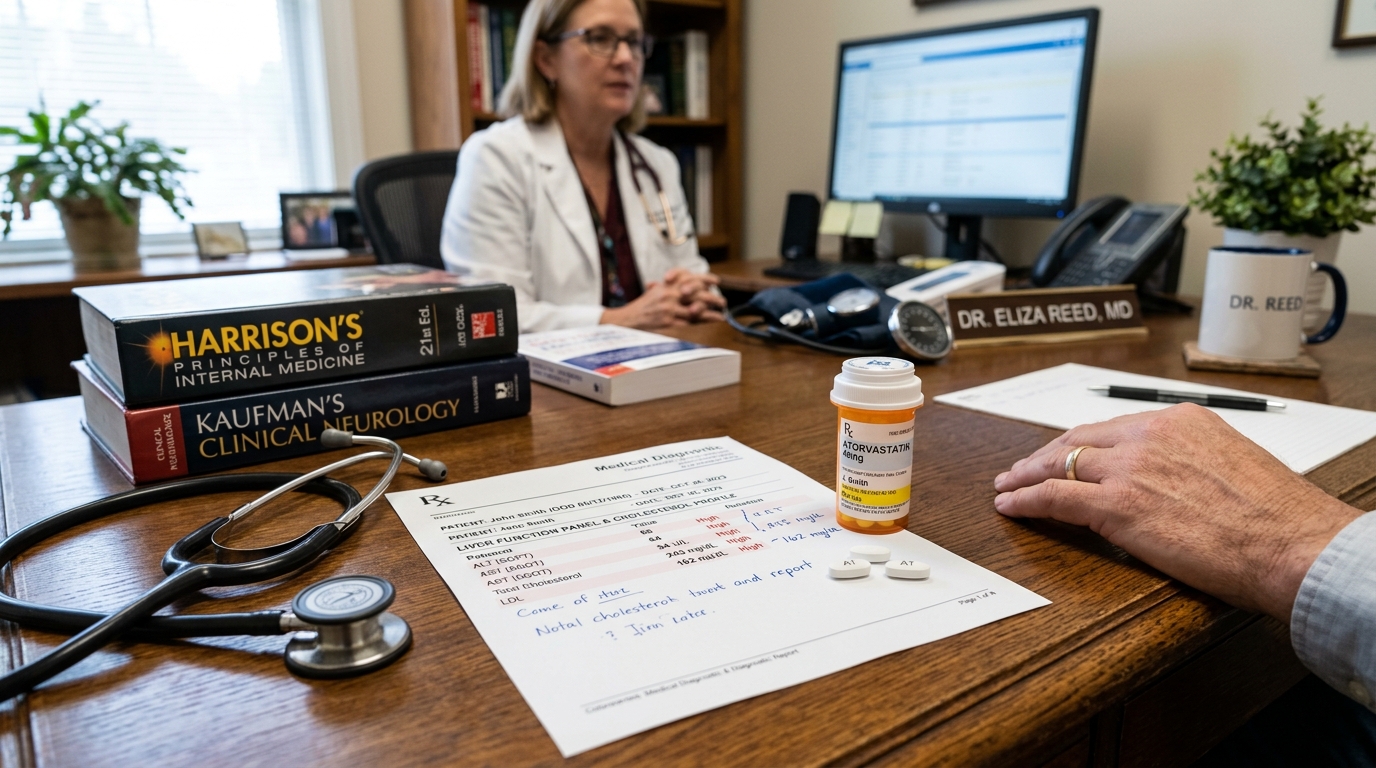
In outpatient clinical gastroenterology, one of the most frustrating scenarios encountered involves a patient diagnosed with metabolic dysfunction-associated steatotic liver disease (MASLD) whose primary care clinician abruptly discontinued their life-saving statin medication because their ALT increased from 34 U/L to 58 U/L.
This reflexive practice—termed statin phobia—stems from outdated packaging inserts dating back to the late 1980s, when the initial approval of lovastatin required routine quarterly blood testing out of an abundance of theoretical caution. That early regulatory caution calcified into widespread clinical myth: the belief that statins are "dangerous for the liver" and should be withheld from anyone with fatty liver or baseline transaminase elevations.
The tragic irony of this misconception is staggering: the exact patients who are most frequently denied statin therapy—those with metabolic liver disease—are the precise individuals who stand to gain the greatest survival benefit from them.
2. The Epidemiological Imperative: What Actually Kills MASLD Patients?
To understand why withholding a statin in MASLD is a dangerous clinical error, one must evaluate the natural history and mortality patterns of metabolic liver disease.
Large prospective epidemiological cohorts tracking tens of thousands of MASLD patients over decades consistently reveal that atherosclerotic cardiovascular disease (ASCVD)—manifesting as acute myocardial infarction, unstable angina, coronary revascularization, and ischemic stroke—is the undisputed #1 cause of mortality (Rinella et al., Hepatology 2023; PMID: 36727674).
Extrahepatic cardiovascular mortality accounts for roughly 40% to 45% of all deaths in MASLD cohorts, far outstripping liver-related mortality from decompensated cirrhosis (which accounts for approximately 8% to 12% of deaths).
Why is cardiovascular risk so high in fatty liver disease? Because hepatic steatosis is not an isolated organ pathology; it is the hepatic manifestation of systemic insulin resistance and atherogenic dyslipidemia. The steatotic liver floods the bloodstream with large, triglyceride-rich VLDL particles, driving the formation of highly atherogenic, small dense LDL particles and oxidizing apolipoprotein B-100 (ApoB). Denying these patients statins to "protect their liver enzymes" leaves their coronary arteries completely defenseless against progressive atheroma rupture.
3. The Scientific Evidence: Debunking the Hepatotoxicity Myth
What does modern clinical pharmacology say about statin liver safety?
1. True Drug-Induced Liver Injury (DILI) is Vanishingly Rare
Systematic surveillance by the United States Drug-Induced Liver Injury Network (DILIN) and national pharmacovigilance registries confirms that idiosyncratic, clinically significant acute liver injury resulting in jaundice, coagulopathy, or acute hepatic failure occurs in approximately 1 out of 100,000 patient-years of statin exposure. This incidence is virtually identical to the background rate of idiopathic acute hepatitis in the general untreated population.
2. Asymptomatic "Transaminitis" is Benign and Adaptive
Between 0.5% and 2.0% of individuals initiated on statin therapy experience an asymptomatic rise in serum alanine aminotransferase (ALT) or aspartate aminotransferase (AST). However, extensive liver biopsy studies confirm that this elevation does not represent hepatocellular necrosis, apoptosis, or architectural injury.
Instead, it represents a benign pharmacodynamic class effect reflecting changes in hepatocyte membrane lipid composition as cellular cholesterol synthesis is suppressed. In over 70% of cases, these enzyme elevations normalize completely over time even as statin therapy continues without dose alteration.
3. The Landmark GREACE Study (Lancet 2010)
The safety of statins in fatty liver was conclusively proven in the landmark Greek Atorvastatin and Coronary Heart Disease Evaluation (GREACE) trial (Athyros et al., Lancet 2010; PMID: 21109302).
Researchers evaluated 437 coronary artery disease patients who presented with baseline abnormal transaminases attributable to hepatic steatosis. Patients treated with atorvastatin (mean dose 24 mg daily) experienced a 68% relative risk reduction in cardiovascular events compared to untreated patients.
Even more remarkably, instead of worsening liver health, statin therapy significantly improved liver enzymes: treated patients experienced an average 47% reduction in ALT and AST, and ultrasonographic steatosis scores regressed dramatically. Treating the systemic metabolic dysfunction relieved hepatic inflammation.
4. What the Professional Guidelines Mandate (AASLD, AHA, EASL)
Every major hepatology, cardiology, and endocrinology society has formally updated their clinical practice guidelines to reflect the safety and necessity of statin therapy in fatty liver disease:
| Professional Society | Official Guideline Recommendation on Statins & MASLD | Key Clinical Practice Rule |
|---|---|---|
| AASLD Practice Guidance (2023) | "Statins are safe and recommended for CVD risk reduction in patients with NAFLD/MASLD across the entire disease spectrum, including compensated cirrhosis." | Do NOT withhold statins due to baseline transaminitis |
| AHA / ACC Cholesterol Guidelines (2019) | Recommends moderate- to high-intensity statin therapy for primary and secondary cardiovascular prevention in patients with metabolic syndrome and steatotic liver disease. | Routine serial LFT monitoring is officially discontinued |
| National Lipid Association (NLA) | Liver Safety Task Force confirmed that statin-induced transaminitis is not true toxicity and that chronic liver disease is not a contraindication. | Statins may be safely initiated even with baseline ALT up to 3x ULN |
The Absolute Contraindications: Where to Exercise Caution
Professional guidelines distinguish sharply between compensated chronic liver disease (where statins are safe and beneficial) and end-stage hepatic decompensation:
- Safe to Prescribe: Simple steatosis (MASLD), active steatohepatitis (MASH), moderate to advanced bridging fibrosis (F2–F3), and compensated cirrhosis (Child-Pugh Class A).
- Contraindicated: Acute fulminant liver failure and decompensated cirrhosis (Child-Pugh Class B or C) presenting with ascites, hepatic encephalopathy, or active variceal bleeding. In decompensated cirrhosis, severely reduced hepatic clearance dramatically increases systemic drug concentrations, elevating the risk of statin-induced rhabdomyolysis.
5. Pleiotropic Hepatoprotective Benefits: Cancer Prevention & Portal Pressure
Beyond reducing atherogenic LDL cholesterol and saving cardiovascular lives, statins confer remarkable pleiotropic hepatoprotective benefits directly within the liver:
1. 30% to 50% Reduction in Liver Cancer (HCC)
Multiple systematic reviews and umbrella meta-analyses demonstrate that regular statin therapy reduces the incidence of hepatocellular carcinoma by 30% to 50% across all chronic liver etiologies. Statins inhibit the mevalonate pathway, depleting geranylgeranyl pyrophosphate (GGPP) and farnesyl pyrophosphate (FPP), thereby deactivating oncogenic Ras and Rho GTPases and arresting malignant cell proliferation.
2. Reduction in Portal Hypertension (HVPG)
In patients with advanced fibrosis and cirrhosis, statins upregulate endothelial nitric oxide synthase (eNOS) in hepatic sinusoidal endothelial cells. This increases intrahepatic nitric oxide availability, relaxing sinusoidal vascular resistance and significantly decreasing hepatic venous pressure gradient (HVPG), thereby lowering the risk of variceal bleeding and hepatic decompensation.
6. Clinical Monitoring Protocols: The "3x ULN" Rule
Recognizing that routine laboratory monitoring created widespread false alarms without improving patient safety, the United States FDA officially removed the requirement for routine periodic liver enzyme testing in 2012. Current clinical protocol follows these pragmatic rules:
- Baseline Assessment: Obtain baseline ALT and AST prior to initiating statin therapy to establish the patient's individual metabolic benchmark.
- No Scheduled Monitoring: Do not order routine 3-month or 6-month LFT checks in asymptomatic patients. Test only if clinical symptoms emerge (unexplained fatigue, loss of appetite, dark urine, jaundice).
- The 3x ULN Rule: If an incidental repeat ALT or AST is < 3 times the upper limit of normal (e.g., < 105 U/L when normal is 35 U/L), continue statin therapy without interruption. Re-check in 8 to 12 weeks.
- When to Stop: Only hold or reduce the statin dose if transaminases persistently exceed > 3 times ULN on two consecutive tests OR if elevated transaminases are accompanied by an increase in total bilirubin ≥ 2.0 mg/dL (Hy's Law) or alkaline phosphatase.
7. Peer-Reviewed Clinical Citations (PubMed References)
1. Rinella ME, Neuschwander-Tetri BA, Siddiqui MS, et al. AASLD Practice Guidance on the clinical assessment and management of nonalcoholic fatty liver disease. Hepatology. 2023;77(5):1797-1835. PMID: 36727674
2. Athyros VG, Tziomalos K, Gossios TD, et al. Safety and efficacy of long-term statin treatment for cardiovascular events in patients with coronary heart disease and abnormal liver tests in the Greek Atorvastatin and Coronary Heart Disease Evaluation (GREACE) Study. Lancet. 2010;376(9756):1916-1922. PMID: 21109302
3. Chalasani N, Younossi Z, Lavine JE, et al. The diagnosis and management of nonalcoholic fatty liver disease: Practice guidance from the American Association for the Study of Liver Diseases. Hepatology. 2018;67(1):328-357. PMID: 28714183
4. Grundy SM, Stone NJ, Bailey AL, et al. 2018 AHA/ACC/AACVPR/AAPA/ABC/ACPM/ADA/AGS/APhA/ASPC/NLA/PCNA Guideline on the Management of Blood Cholesterol. Circulation. 2019;139(25):e1082-e1143. PMID: 30586774
Frequently Asked Questions: Statin Safety & Fatty Liver
Are statins safe for patients with fatty liver disease and elevated liver enzymes?
Yes, statins are completely safe and strongly recommended in patients with MASLD, MASH, and compensated cirrhosis. Practice guidelines from the American Association for the Study of Liver Diseases (AASLD) explicitly state that statins should not be withheld simply because baseline transaminases (ALT/AST) are elevated. True drug-induced liver failure from statins is vanishingly rare (approximately 1 in 100,000 patient-years), whereas cardiovascular disease is the leading cause of death in fatty liver patients.
What is the primary cause of death in patients with MASLD and MASH?
The number one cause of mortality in patients with MASLD and MASH is cardiovascular disease (myocardial infarction, sudden cardiac arrest, and stroke)—not end-stage liver failure or cirrhosis. Atherogenic dyslipidemia driven by insulin resistance accelerates arterial plaque formation. Withholding life-saving statin therapy due to unfounded fears of liver toxicity significantly increases patient mortality.
Do statins provide direct benefits to the liver itself?
Yes. Beyond lowering atherogenic LDL and ApoB particles, statins exert powerful pleiotropic anti-inflammatory and antifibrotic effects within the hepatic microcirculation. Large clinical observational series and meta-analyses demonstrate that regular statin therapy is associated with a 30% to 50% reduction in the incidence of hepatocellular carcinoma (HCC), decreased portal vein pressure (HVPG), and a significantly lower rate of progression from bridging fibrosis to decompensated cirrhosis.